Introduction
Before a guest orders their first drink, they've already judged your bar. The countertop sets that first impression, whether it's a marble-topped home wet bar or a 40-foot quartz slab at a busy restaurant.
Looks are only part of the equation, though. Bars take a beating that kitchen counters never see, with constant spills, ice buckets, glass impacts, and hours of daily wiping down wearing down a surface fast. Pick the wrong material and you're looking at stains, chips, or a full replacement within a few years, plus the cost of redoing it right.
This guide breaks down the top bar countertop materials, weighs the practical factors that actually matter, and matches the right surface to home bars, commercial bars, and coffee bars alike.
Key Takeaways
- Quartz wins for high-traffic bars with non-porous, low-maintenance durability.
- Granite offers natural beauty with strong heat and scratch resistance.
- Marble and onyx suit low-traffic home bars but demand careful spill control.
- Match material to traffic, porosity, budget, and overhang needs before buying.
- CKF matches material to use case, then fabricates and installs it right the first time.
What is a Bar Countertop and Why Material Choice Matters
A bar countertop is more than a kitchen counter with a fancier name. It's the primary work surface and display area for a home, restaurant, or commercial bar.
It takes on stresses a standard kitchen never faces: constant beverage spills, melting ice, glassware knocks, and hours of continuous wiping with cleaning chemicals.
Material options fall into three categories:
- Natural stone: granite, marble, slate, onyx
- Engineered surfaces: quartz, solid surface, laminate
- Organic materials: wood/butcher block, copper
Each category handles moisture, impact, and daily wear differently. Getting that match right upfront saves money and headaches later.
Popular Materials for Bar Countertops
This section breaks down the most common bar countertop materials by appearance, durability, and ideal use case, so you can narrow your options before diving into the decision factors below.
Granite
Granite brings natural variation that no two slabs replicate exactly, along with genuine toughness. It resists scratches and chips well, and the Natural Stone Institute notes granite typically holds up to heat around 250°C/480°F, though direct localized heat exposure is still discouraged to avoid stress cracking.
Most granite counters don't require sealing, but a quality sealer applied where needed can last 10 to 15 years (Natural Stone Institute). Granite suits high-traffic bars that want a distinctive, natural look without constant upkeep.
Quartz (Engineered Stone)
Quartz is engineered from ground quartz crystals bound with resin, which makes it non-porous by design. That means no sealing, strong resistance to staining and bacteria growth, and tight color/pattern consistency across an entire bar top or multiple locations.
- Non-porous surface resists wine, citrus, and alcohol stains
- No sealing required, unlike most natural stones
- Consistent color batches, useful for matching multiple bar sections or franchise locations
These properties explain why quartz shows up so often in commercial bar installations and busy home bars alike, where consistent performance matters more than natural variation.
Marble
Marble delivers dramatic veining and a soft, luxurious look that's hard to replicate. But it's also a softer stone, rating roughly Mohs 3-5 compared to granite's 6-7 (MSI).
That softness matters at a bar. Red wine wiped promptly usually won't stain, but its acids can still etch the surface, dulling the polish permanently. Citrus and vinegar-based cleaners pose the same risk. Marble works best as an accent or feature surface in low-traffic home bars, not a heavy-use pour station.
Wood/Butcher Block
Wood brings warmth and an eco-friendly appeal that stone and quartz simply don't offer. It's a popular choice for casual home bars and rustic-style cafés.
The trade-off is maintenance. Oil-finished wood counters typically need reconditioning at least once a month, depending on use. Commercial factory-finished wood tops require prompt moisture removal and periodic resanding once the finish wears down. Left wet or unattended, wood absorbs liquid, odors, and stains fast, which makes it a demanding choice for a surface that sees regular spills.
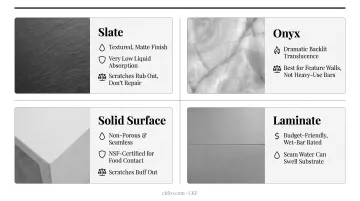
Other Specialty Options (Slate, Onyx, Solid Surface, Laminate)
- Slate offers a textured, matte look with very low liquid absorption and stain/heat resistance, and scratches can often be rubbed out rather than repaired.
- Onyx creates a dramatic backlit, translucent effect for high-end lounges, but its fragility makes it better suited to feature walls than heavy-use bar tops.
- Solid surface (like Corian) is non-porous, seamless, and NSF-certified for food contact, with scratches that can often be buffed out.
- Laminate is the budget-friendly option, explicitly rated for wet bars by manufacturers, though water at the seams can swell the substrate over time.
What to Consider When Choosing the Best Bar Countertop Material
The right material depends on how the bar will actually be used, not just how it photographs. These five factors turn a design preference into a confident, practical decision.
Traffic Level and Durability
A bar pouring hundreds of drinks a night needs a surface that shrugs off impact, heat, and constant contact. Granite and quartz both hold up well here. A low-traffic home bar used a few times a week has far more design flexibility, opening the door to softer, more decorative materials like marble or onyx.
Maintenance and Porosity
Porous stones like marble, granite, and slate absorb liquid to varying degrees and typically need sealing to resist wine, citrus, and alcohol stains. Quartz, being engineered and non-porous, needs virtually no sealing or special upkeep beyond regular cleaning.
Quick reference:
| Material | Porosity | Sealing needed |
|---|---|---|
| Quartz | Non-porous | No |
| Granite | Low-moderate | Sometimes |
| Marble | Moderate-high | Usually |
| Slate | Very low | Rarely |
| Laminate | Non-porous surface, vulnerable seams | No, but seal seams |
Budget and Long-Term Value
Upfront material cost only tells part of the story. A cheaper material that needs frequent resealing or refinishing can cost more over five years than a pricier, low-maintenance option.
Installed cost ranges (2026 national averages):
- Quartz: roughly $50 to $200 per sq ft (Angi)
- Granite: roughly $70 to $185 per sq ft
- Butcher block: roughly $50 to $150 per sq ft
These are national guides, not Midwest fabrication quotes, so actual pricing will shift based on edge profiles, cutouts, slab grade, and local labor.
Aesthetics and Design Flexibility
Engineered materials like quartz offer near-unlimited color and pattern consistency, which matters for branding across a restaurant chain or multi-bar venue. Natural stones like granite and marble bring one-of-a-kind character instead, ideal for a space meant to feel distinctive rather than uniform.
Thickness and Overhang Standards
Bar-top slabs are commonly fabricated in 1.2cm, 2cm, or 3cm thicknesses, with 3cm often recommended for added strength and a more substantial edge look. Thinner slabs work fine when properly supported, but heavier bar traffic generally favors the thicker option.
Overhang is where a lot of buyers get confused. The comfortable knee-space depth actually depends on counter height, not a single universal number:
- 30-inch counter: 18 inches of knee space
- 36-inch counter: 15 inches of knee space
- 42-inch bar-height counter: 12 inches of knee space
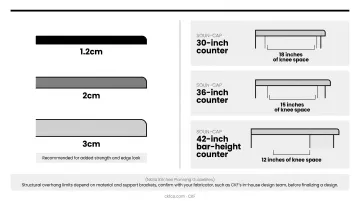
(NKBA Kitchen Planning Guidelines)
Structural overhang limits are separate from seating comfort and depend on the material and support brackets used, so this is a detail worth confirming with your fabricator, such as CKF's in-house design team, before finalizing a design.
Best Bar Countertop Material by Bar Type
There's no universal "best" material. The right pick always depends on the specific setting and how hard the surface will be worked.
Home Bars
Lower traffic and personal use mean more room to prioritize looks. Marble, onyx, or butcher block all make strong statement pieces here, especially in a bar that's used for entertaining rather than constant daily pours.
Commercial and Restaurant Bars
Constant spills, glassware impact, and daily sanitizing demand a tougher surface. Quartz and granite handle this volume well, which is why they dominate restaurant and hospitality installations.
CKF's project with Smash Park La Vista used Silestone Iconic White quartz with an L Miter edge profile for exactly this kind of high-traffic entertainment bar setting.
Coffee Bars and Cafés
Coffee, syrups, and frequent wipe-downs call for stain-resistant, low-maintenance surfaces. Quartz and solid surface both perform well here. Butcher block remains a popular alternative for lower-volume, warmer-feeling cafés willing to accept more upkeep.
CKF fabricated a coffee bar for Goldenrod Companies in Omaha using Private Studio Collection quartz in Et Noir, designed to hold up to daily employee traffic while still looking sharp.
How CKF Can Help You Choose and Fabricate the Right Bar Countertop
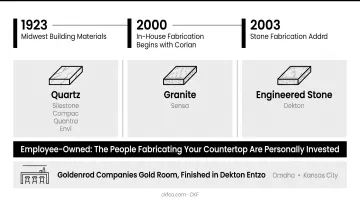
CKF has been part of the Midwest building materials landscape since 1923. The company has fabricated stone and solid surface countertops in-house since 2000, starting with Corian and expanding into stone in 2003. That history matters when you're trying to match a material to years of daily bar use rather than just a showroom sample.
Working with CKF means you can compare durability, budget, and style side by side in one location instead of driving between multiple suppliers. The design team can walk through options across quartz brands like Silestone, Compac, Quantra, and Envi, Sensa granite, and Dekton engineered stone, without a second appointment across town.
What sets the experience apart:
- In-house craftsmen using current fabrication technology to cut and finish slabs
- Employee-owned structure, meaning the people fabricating your countertop are personally invested in getting it right
- A documented track record across Omaha and Kansas City, including commercial installs like the Goldenrod Companies Gold Room bar, finished in Dekton Entzo
CKF's team can help you weigh a marble-look quartz against actual marble, or compare granite against Dekton, based on your bar's real traffic and maintenance appetite.
Conclusion
There's no single "best" bar countertop material. The right choice balances how the bar gets used, who's using it, and how much maintenance the owner is realistically willing to commit to.
Whatever surface you land on, protect it with a few consistent habits:
- Check sealant condition periodically, especially on natural stone
- Watch for wear near sinks and high-traffic edges
- Clean consistently with material-appropriate products
These habits keep any material performing well for years to come. Not sure where to start? CKF's design team can walk you through samples in person at any Midwest showroom.
Frequently Asked Questions
What is the best material for bar countertops?
Quartz is best for durability and low maintenance in high-traffic settings. Granite and marble suit lower-traffic or design-focused bars where appearance takes priority over heavy daily use.
How thick should a bar countertop be?
Most bar tops run 1.2cm to 3cm (about ½ inch to 1¼ inches) thick, depending on the material and support structure. Thicker slabs are often chosen for a more dramatic edge profile or added structural strength.
What is the best countertop for a coffee bar?
Quartz or solid surface work best for coffee bars, since both resist staining from coffee, syrups, and frequent cleaning without needing special upkeep.
Is granite or quartz better for a bar countertop?
Granite offers natural beauty but sometimes needs sealing. Quartz is non-porous and needs virtually no maintenance, making it the stronger pick for heavy commercial use.
How much overhang should a bar countertop have?
It depends on counter height: 18 inches at 30 inches high, 15 inches at 36 inches, and around 12 inches at a standard 42-inch bar height, adjusted for stool height and support brackets.
Can you use laminate for a bar top?
Yes. Laminate is a budget-friendly, near-seamless option suited to wet bars, though it's less durable and harder to repair than stone or quartz once seams or edges take on water damage.