Introduction
Walk into almost any Midwest kitchen or bath showroom, and you'll hear the same mix-up: someone asking about "quartzite" while pointing at a slab of engineered quartz, or vice versa. The names sound alike, but one is a factory-made product and the other is pulled straight from the earth.
That distinction shapes your maintenance routine, how the surface handles a hot pan set down without thinking, and even resale value down the road.
In Houzz's 2025 U.S. Kitchen Trends Study of 1,620 renovating homeowners, engineered quartz was selected by 39% and quartzite by 11% — two of the most popular countertop categories in the country. Below, we break down how they differ in composition, durability, care, and cost so you can choose with confidence.
Key Takeaways
- Quartz is engineered stone (crushed quartz, resin, pigment); quartzite is 100% natural metamorphic rock.
- Quartzite handles direct heat better; quartz is nonporous and never needs sealing.
- Natural sourcing and specialized cutting make quartzite the higher-cost option in most kitchens.
- Your kitchen habits, not a universal "winner," should drive the decision.
Quartz vs. Quartzite: Quick Comparison
Here's a side-by-side snapshot for anyone comparing slabs on a showroom floor.
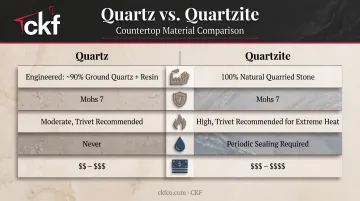
| Factor | Quartz | Quartzite |
|---|---|---|
| Composition | Engineered (crushed quartz + resin) | Natural metamorphic rock |
| Hardness | Mohs 7 | Mohs 7 (quartz mineral content) |
| Heat resistance | Trivet recommended above ~356°F | Naturally heat tolerant, trivet still advised |
| Sealing | Never needed | Periodic, based on porosity |
| Typical cost | Lower, more predictable | Higher, more variable |
Cost
Quartz typically runs $50 to $100 per square foot installed, according to Angi's national pricing guide. Brand, color rarity, and edge detail all push that number up.
Quartzite tends to cost more. Angi's quartzite guide lists a broader range, from $80 to $220 per square foot installed. Natural sourcing, slab rarity, and the specialized diamond-tooling required to cut it account for the premium. Pricing varies enough by region and supplier that it pays to get a project-specific quote rather than relying on a single national average.
Composition
Quartz is manufactured from roughly 90% ground quartz combined with resins and pigments, giving fabricators tight control over color and pattern consistency. Quartzite starts as sandstone, then gets fused into dense, quartz-rich rock through millions of years of heat and pressure underground. No two slabs read exactly alike.
Durability & Hardness
Both materials land around Mohs 7, hard enough to resist everyday scratching from knives and cookware. The difference shows up at the edges: quartz's resin binder adds a bit of flex. Quartzite's brittleness can make sharp corners more prone to chipping during fabrication or heavy impact.
Heat Resistance
Quartzite shrugs off a hot pan pulled straight from the stove. Quartz can too, within reason, but its resin binder is the weak point. Cosentino's Silestone line is rated for thermal shock resistance up to 356°F, and the manufacturer still recommends a trivet for anything hotter.
Maintenance & Sealing
- Quartz: Nonporous, no sealing, ever. Soap and water handle daily cleanup.
- Quartzite: Sealing needs depend on the stone's density. Some varieties go a decade between resealing; others need it more often.
To check a quartzite seal, dab water on the surface. If it beads up, you're fine. If it darkens or soaks in, reseal. Stick to pH-neutral cleaners; harsh or acidic products can degrade the sealer over time.
What Is Quartz?
Quartz countertops are engineered stone: crushed natural quartz crystals bound with polymer resin and pigment, then cured under heat and pressure in a factory. For Midwest families juggling school lunches and weeknight dinners, that process delivers a low-maintenance surface.
Core benefits:
- Nonporous surface — spaghetti sauce, wine, and coffee stay on top, so you skip sealing and cut down on stain headaches
- Consistent color and pattern — easier to match an island to perimeter counters across every slab
- Day-to-day durability — stands up to busy kitchens better than many natural stones when used as directed
Quartz also comes in a wider design range than most people expect. CKF's lineup alone spans brands like Silestone, Compac, Elantra, and ASMI, with finishes from polished to Suede and colorways that closely mimic Calacatta marble and natural quartzite veining.
Where Quartz Works Best
Quartz fits best where predictability matters as much as looks:
- Busy family kitchens where spills happen daily and sealing schedules aren't realistic
- Rental properties and spec homes, where uniform slabs simplify multi-unit ordering
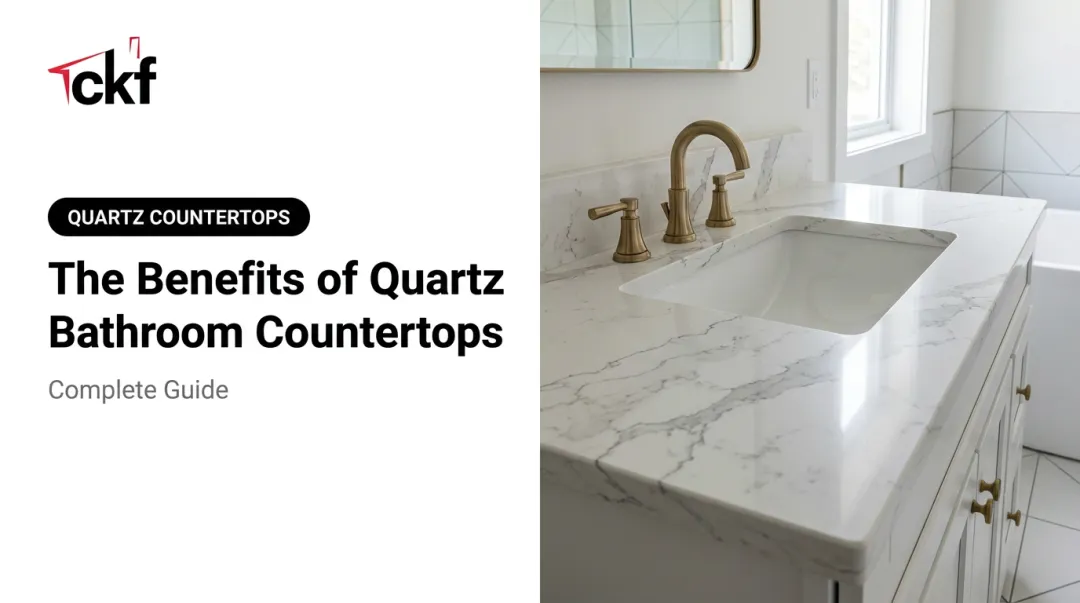
- Bathroom vanities, especially across multiple bathrooms in one home
- New home construction and commercial kitchens that need reliable, repeatable ordering at scale
That demand shows up in industry data: quartz has led U.S. countertop material selection for more than a decade, with a 2025 share around 39% even after a slight year-over-year dip.
What Is Quartzite?
Quartzite is a natural metamorphic rock, born when sandstone gets buried under intense heat and pressure until its grains fuse into a dense, quartz-rich stone. Unlike quartz, nothing about it is manufactured. Every slab carries its own veining, color shift, and mineral history. That one-of-a-kind character is why homeowners who want an authentic natural look gravitate toward it.
What that natural origin delivers:
- Superior heat resistance, so a hot pan near the stove is less of a worry
- Hardness that stands up to years of chopping and daily wear
- Unique veining that mimics marble's look without the softness or staining
Not all quartzite behaves the same, though. Denser, low-porosity slabs need sealing far less often than more porous cuts from the same quarry.
That variability is why authenticity matters. Quartzite is one of the most commonly mislabeled stones in the industry, and some slabs sold under that name are actually softer dolomitic marble. CKF's in-house fabrication team works with established natural stone suppliers to confirm a slab is genuine quartzite before it reaches a customer's kitchen.
Use Cases of Quartzite
Quartzite earns its price premium in statement applications:
- Kitchen islands designed as the visual centerpiece of the room
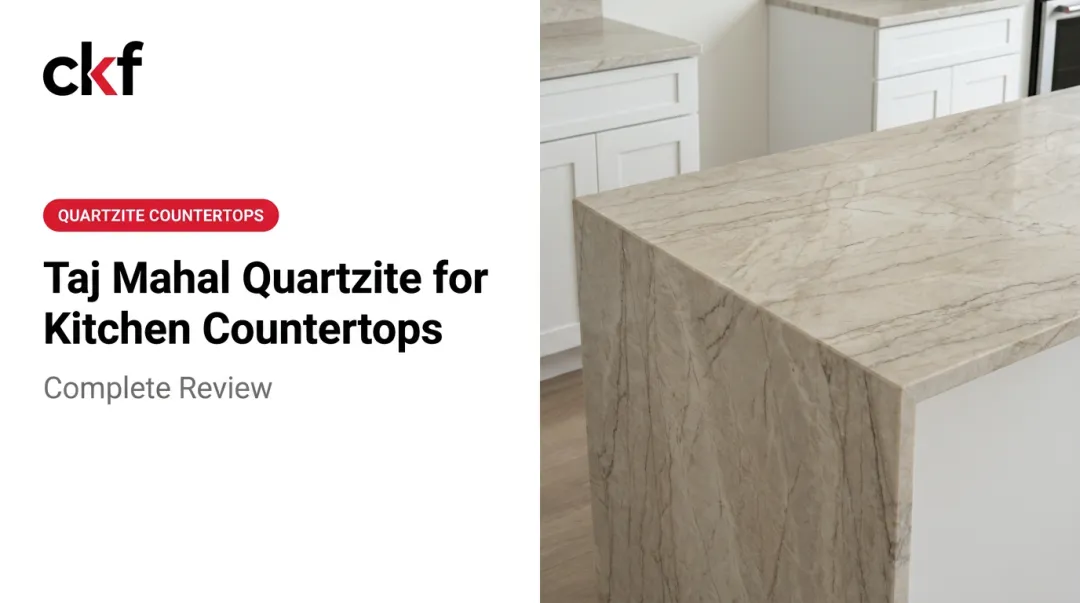
- Waterfall edges that showcase continuous, dramatic veining
- Fireplace surrounds and outdoor kitchen surfaces exposed to sun and heat
- High-end custom builds and chef-driven kitchens where natural stone is non-negotiable
The category is gaining ground, too. The National Kitchen & Bath Association noted in its 2025 year-in-review that quartzite "gained momentum" alongside quartz for both countertops and backsplashes — a sign that luxury remodels are leaning further into natural stone.
Quartz vs. Quartzite: Which Is Better?
Neither material wins outright. The right call depends on four factors:
- Maintenance tolerance: can you commit to occasional resealing, or do you want zero upkeep?
- Heat exposure habits: do pots regularly land on the counter straight off the burner?
- Budget flexibility: is a wider price range acceptable for a one-of-a-kind slab?
- Design priorities: do you want guaranteed uniformity or natural variation?
Choose quartz if you run a busy kitchen and want predictable color across every slab with zero sealing.
Choose quartzite if you want an authentic natural surface that shrugs off hot cookware and don't mind checking the seal once in a while.
Real-World Example: A Midwest Remodel Decision
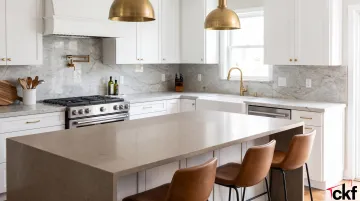
One CKF project, the Brightly Remodeled Kitchen, shows how these two materials can coexist in the same room. Perimeter counters in UGM Taj Mahal quartzite bring natural, one-of-a-kind veining near the range and sink.
The island uses Silestone Corktown quartz in a Suede finish, a practical, low-maintenance surface for the high-traffic prep zone where family and guests gather.
Both surfaces were finished with eased edges for a clean, cohesive look tying the two materials together. The result: a kitchen that gets natural stone's visual impact where it counts most, without asking the busiest work zone to carry the extra care.
If you're facing a similar decision, CKF's design consultants can walk you through both materials in person. Schedule a design consultation at one of CKF's Midwest showrooms to compare quartz and quartzite slabs side by side before you commit.
Conclusion
Quartz and quartzite each win for different kitchens—the right pick depends on how you actually use the space. If a busy household, consistent color, and zero sealing sound like your priorities, quartz delivers that dependability. If you want the one-of-a-kind beauty of natural stone and don't mind an occasional reseal, quartzite's heat resistance and unique veining are hard to beat.
Whichever direction you lean, the decision carries real, lasting consequences — from your weekly cleaning routine to how the surface photographs when it's time to sell.
CKF has spent more than a century helping Midwest homeowners make this call. An in-house fabrication team handles both engineered and natural stone under one roof, so that heritage and hands-on expertise are worth leaning on before you sign off on a slab.
Frequently Asked Questions
Is quartzite worth it over quartz?
Quartzite is worth it if you want natural beauty and superior heat resistance and don't mind periodic resealing. Quartz is often the smarter value for low-maintenance, high-traffic kitchens.
Can I use Clorox wipes on quartzite?
Bleach-based wipes can be too harsh for sealed quartzite and may wear down the sealant faster over time. Stick to pH-neutral stone cleaners for routine cleanup instead.
What is the main difference between quartz and quartzite?
Quartz is engineered stone made from crushed quartz crystals bound with resin. Quartzite is 100% natural metamorphic rock formed from sandstone under heat and pressure.
Which is more expensive, quartz or quartzite?
Quartzite is generally pricier due to natural sourcing and specialized cutting, typically running higher per square foot than standard quartz. High-end quartz colors, though, can rival mid-range quartzite pricing.
Do you need to seal quartzite countertops?
Most quartzite needs periodic sealing, which you can check with a simple water-drop test on the surface. Denser, low-porosity varieties may need it far less often.
Which is better for heat resistance, quartz or quartzite?
Quartzite handles hot pans set directly on its surface without issue. Quartz's resin binder is more heat-sensitive, so a trivet is recommended for anything very hot.