But here's the challenge: with so many colors, materials, and fixtures to choose from, it's easy to end up with a kitchen that feels like a theme park rather than a home. One too many barn-wood accents, and suddenly the room reads as costume, not character.
This guide organizes 51 farmhouse kitchen design ideas into six practical categories: color, materials, fixtures, layout, style variations, and decor. The goal is a space that feels warm, cohesive, and genuinely livable.
Key Takeaways
- Farmhouse kitchens pair rustic materials (wood, stone, wicker) with functional, modern layouts.
- Soft neutrals, warm whites, sage, and navy all fit comfortably within the farmhouse palette.
- Small details, like hardware, lighting, and open shelving, often create more warmth than big-ticket changes.
- CKF's in-house fabrication and design consultations help translate farmhouse inspiration into custom cabinetry and countertops built to last.
Farmhouse Color Palettes and Cabinetry Ideas
Color is usually the first decision homeowners make, and it sets the tone for everything that follows. Stark black-and-white farmhouse looks are fading. In their place: warmer, layered palettes that feel lived-in rather than staged.
Warm and Airy Neutral Palettes
Crisp white has given way to softer, warmer tones:
- Soft white cabinetry (think Alabaster or Shoji White rather than bright white)
- Warm cream tones for a cozier feel
- Layered off-whites paired with natural wood accents
- Whitewashed wood finishes that preserve grain texture
- Sandy beige as an alternative to traditional white
Bold and Moody Color Choices
For homeowners wanting more drama than an all-neutral scheme offers, contrast keeps a farmhouse kitchen from feeling flat:
- Navy blue island against lighter perimeter cabinetry
- Deep sage green cabinetry for an earthy, updated look
- Charcoal lower cabinets with white uppers
- Matte black hardware accents for definition
- Gray-blue tones as a softer alternative to full navy
Two-Tone and Layered Cabinetry
Mixing finishes adds depth without overwhelming the space:
- Painted island paired with a natural wood perimeter
- Contrasting upper and lower cabinet colors
- Mixing stained and painted wood tones in the same kitchen
- Wood open shelving against painted cabinet boxes
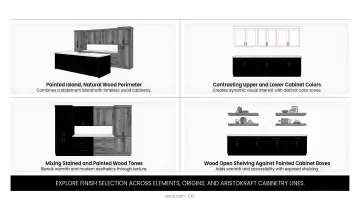
Cabinetry is typically the single largest visual investment in a farmhouse remodel, which is why getting the color right matters so much. CKF's design team works directly with homeowners on this decision, guiding finish selection across lines like Elements, Origins, and Shaker-style Aristokraft cabinetry so the choice holds up well beyond current trends.
Materials, Textures, and Countertop Ideas
Farmhouse warmth comes largely from natural, tactile materials, the kind that age gracefully instead of looking worn out. This is where the style earns its "heart of the home" reputation.
Natural Wood and Butcher Block Accents
Wood brings texture and history into the kitchen:
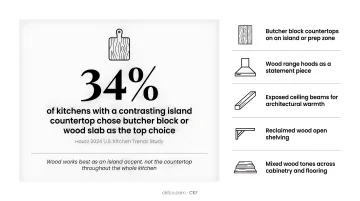
- Butcher block countertops on an island or prep zone
- Wood range hoods as a statement piece
- Exposed ceiling beams for architectural warmth
- Reclaimed wood open shelving
- Mixed wood tones across cabinetry and flooring
Among kitchens with a contrasting island countertop, butcher block or wood slab was the top choice at 34%, according to Houzz's 2024 U.S. Kitchen Trends Study. Wood tends to work best as an island accent rather than the countertop material throughout the whole kitchen.
Stone and Durable Countertop Surfaces
For daily durability, stone and engineered surfaces still lead:
- Honed marble countertops for classic, soft-touch elegance
- Quartz engineered to mimic soapstone or marble veining
- Waterfall-edge islands for a more tailored farmhouse look
Engineered quartz made up 46% of upgraded countertops across all kitchen styles in the same Houzz study. Durability clearly doesn't have to come at the expense of the farmhouse aesthetic. CKF's in-house fabrication team turns that durability into a custom fit, shaping quartz lines like Silestone into farmhouse-ready edges and finishes for the specific kitchen.
Flooring and Backsplash Textures
Ground-level and wall details finish the material story:
- Reclaimed hardwood floors
- Checkered black-and-white tile
- Subway tile paired with shiplap
- Natural stone backsplash
- Exposed brick, painted or left natural
Farmhouse Fixtures, Fittings, and Layout Ideas
Fixtures and layout are where farmhouse charm has to earn its keep functionally. A beautiful sink that's a pain to use daily isn't a win.
The Farmhouse Sink and Hardware
The apron-front sink remains the style's signature element:
- Apron-front farmhouse sink positioned beneath a window
- Bridge faucets for a vintage-inspired silhouette
- Aged brass or matte black hardware
- Skirted sink curtains for softness underneath
Worth noting: 24% of NKBA survey respondents flagged apron-front sinks as a trend on the decline, based on the NKBA 2024 Kitchen Trends Research Report. Treat the farmhouse sink as an intentional functional choice rather than a box to check.
The Kitchen Island and Farmhouse Table
The island often becomes the room's social anchor:
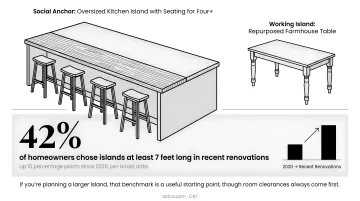
- Oversized wood island with seating for four or more
- Salvaged table repurposed as a working island
- Farmhouse dining table as the room's visual centerpiece
- Mixed-material island tops (wood plus stone)
42% of homeowners chose islands at least 7 feet long in recent renovations, up 10 percentage points since 2020, per Houzz data. If you're planning a larger island, that benchmark is a useful starting point, though room clearances always come first.
Lighting and Storage Solutions
Small fixtures often deliver the biggest visual payoff:
- Oversized pendant lighting over the island
- Candelabra-style chandeliers for softness
- Open wooden shelving for everyday dishware
- Plate racks and hutches for display storage
- Wall-mounted hooks for towels and utensils
Statement Appliances
Appliances can carry farmhouse character too:
- Range cookers in the AGA or Smeg tradition
- Wooden range hoods that echo cabinetry tones
- Vintage-inspired refrigerators in muted colors
None of these fixtures matter without cabinetry that fits the room's proportions and daily use. Mixed-material islands and open shelving both depend on custom cabinetry sized correctly for the space, which is where a design consultation with a fabricator like CKF pays off before any sink or hardware gets ordered.
Farmhouse Style Variations to Explore
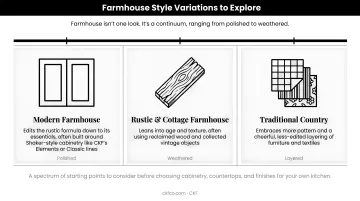
Farmhouse isn't one look. It's a continuum, ranging from polished to weathered.
| Style | Defining Features |
|---|---|
| Modern Farmhouse | Clean lines, Shaker-style cabinetry, restrained palette, minimal ornamentation |
| Rustic & Cottage Farmhouse | Reclaimed materials, vintage textiles, decorative open shelving, visible patina |
| Traditional Country-Style Farmhouse | Painted cabinetry, decorative trim details, brighter colors, classic charm |
Modern farmhouse edits the rustic formula down to its essentials, often built around Shaker-style cabinetry like CKF's Elements or Classic lines. Rustic and cottage farmhouse leans into age and texture, often using reclaimed wood and collected vintage objects. Traditional country style sits at the other end, embracing more pattern and a cheerful, less-edited layering of furniture and textiles, giving you a spectrum of starting points to consider before choosing cabinetry, countertops, and finishes for your own kitchen.
Decorative Details, Accessories, and Mistakes to Avoid
Finishing Touches That Add Warmth
The smallest details often do the heaviest lifting:
- Woven baskets for storage and texture
- Dried florals or greenery on open shelves
- Vintage-inspired art or signage
- Gingham or striped textiles on chairs and windows
- Jute rugs for grounding texture underfoot
- A dedicated coffee bar station as a functional focal point
These accessories work best when the underlying cabinetry and countertops are chosen well; get those foundational elements wrong, and no amount of styling will fix it. That's where most farmhouse kitchens run into trouble.
Common Farmhouse Design Mistakes
Even well-intentioned farmhouse kitchens can miss the mark. Watch for these three traps:
- Overusing rustic elements. Too much reclaimed wood, too many barn-door accents, and the kitchen starts to feel themed instead of authentic.
- Prioritizing looks over function. A vintage-style refrigerator with poor storage capacity looks charming but frustrates daily use. The same applies to countertops and cabinetry: a surface that photographs beautifully but stains easily or cabinets without enough storage will wear on you fast.
- Playing it too safe. An all-neutral palette with no contrast or texture can read as cold rather than cozy. Warm wood stains and muted color tones typically outperform stark white-on-white schemes.
Frequently Asked Questions
What is the best color for a farmhouse kitchen?
Soft whites, warm neutrals, and muted greens like sage are classic, reliable choices. Navy or charcoal work well if you want a bolder, more modern farmhouse feel.
What is the difference between a farmhouse kitchen and a country kitchen?
Farmhouse kitchens lean toward neutral, pared-back palettes with an unfussy feel. Country kitchens embrace brighter colors, more pattern, and a cheerful, informal mix of furniture.
What defines a modern farmhouse kitchen style?
Modern farmhouse blends Shaker-style cabinetry, cleaner lines, and a more restrained color palette. It's essentially traditional farmhouse with the rustic elements edited down.
What is the best countertop material for a farmhouse kitchen?
Butcher block brings natural warmth, while marble or quartz offers durability with a timeless look. CKF's design team can help you match the right material to your layout and budget.
Is farmhouse kitchen style still in style?
Yes, though its share of renovations has declined slightly in recent years. It remains popular because it continually evolves, blending modern restraint with rustic warmth rather than staying frozen in one look.
How can I get a farmhouse kitchen look on a budget?
Start with paint, swap outdated hardware and lighting fixtures, and add textiles or accessories like baskets and rugs. These low-cost changes deliver farmhouse character before committing to a full remodel.