Use the wrong cleaner, or let that glass of red wine sit too long, and you're looking at dulling, streaking, or discoloration that's tough to undo. This guide walks through daily cleaning habits, products to avoid, stain removal, and long-term care, drawing on what we've learned fabricating custom quartz countertops at CKF for over two decades.
Key Takeaways
- Quartz never needs sealing, but daily wiping prevents dullness over time
- Mild dish soap and warm water are the safest everyday cleaners
- Skip bleach, ammonia, vinegar, and abrasive pads on quartz surfaces
- Wipe up wine, coffee, and citrus spills immediately to avoid staining
- Use trivets and cutting boards—quartz resists heat and scratches but isn't immune
Why Proper Cleaning Care Matters for Quartz Countertops
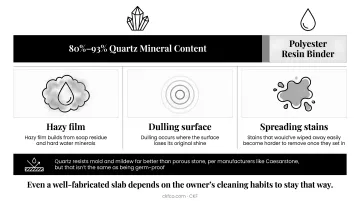
Quartz is engineered from crushed natural quartz combined with polyester resins, typically making up 80% to 93% of the material by weight depending on the brand. That mineral density is why it outperforms granite and marble on scratch and stain resistance. But the resin binding it all together isn't invincible.
Skip regular cleaning, and here's what happens over time:
- A hazy film builds up from soap residue and hard water minerals
- Dulling occurs where the surface loses its original shine
- Stains that would've wiped away easily become harder to remove once they set in
There's a hygiene angle too. Kitchen and bathroom countertops accumulate bacteria from food prep, hand contact, and moisture. Because quartz is non-porous, manufacturers like Caesarstone note it resists mold and mildew far better than porous stone. That's not the same as being germ-proof, though. Regular cleaning still matters for sanitation, not just shine.
That daily upkeep also protects the investment behind the surface. At CKF, our fabrication team builds custom quartz countertops to last for decades, but even a well-fabricated slab depends on the owner's cleaning habits to stay that way.
Daily and Weekly Cleaning Routine
You don't need a complicated system to keep quartz looking new—just five minutes a day and one deeper clean each week. Consistency beats intensity every time.
Daily Cleaning Steps
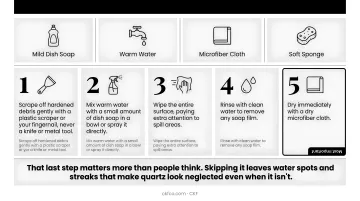
Grab these before you start:
- Mild dish soap
- Warm water
- Microfiber cloth
- Soft sponge
Then follow this process:
- Scrape off hardened debris gently with a plastic scraper or your fingernail, never a knife or metal tool
- Mix warm water with a small amount of dish soap in a bowl or spray it directly
- Wipe the entire surface, paying extra attention to spill areas
- Rinse with clean water to remove any soap film
- Dry immediately with a dry microfiber cloth
That last step matters more than people think. Skipping it leaves water spots and streaks that make quartz look neglected even when it isn't.
Weekly Deep Clean
Once a week, go a step further. Use a pH-neutral, quartz-safe all-purpose cleaner to cut through residue buildup that daily soap-and-water misses, restoring the original shine when the surface starts looking slightly flat. CKF's design consultants can point you toward quartz-safe cleaners that won't void your slab's warranty.
One caveat: acidic spills like wine, coffee, citrus juice, and tomato sauce shouldn't wait for the weekly clean. Wipe those up the moment they happen, every single day, to avoid staining.
What NOT to Use on Quartz Countertops
Most quartz damage doesn't come from everyday wear — it comes from the wrong bottle under the sink.
Bleach and Ammonia-Based Cleaners
Many all-purpose sprays, glass cleaners, and oven cleaners contain bleach or ammonia. MSI specifically warns these can damage the resin binder holding the quartz crystals together, leading to discoloration and a dulled finish over time. Some brands allow very limited, short-duration bleach use for specific stains, but that's not the same as using it for everyday cleaning.
Acidic Cleaners
Vinegar, lemon juice, and citrus-based cleaners feel "natural" and safe, but their acidity can etch the resin surface with repeated use. Occasional, brief use on a hard water stain is one thing. Using vinegar as your go-to daily cleaner is a different story, and one that leads to a dulled surface over months.
Abrasive Tools
Skip these entirely:
- Steel wool
- Scouring pads
- Abrasive scrubbing sponges
- Aluminum-oxide pads
Even though quartz resists scratches better than most natural stone, these tools leave microscopic scratches that dull the finish and trap grime over time.
Extreme Heat and Sudden Temperature Shifts
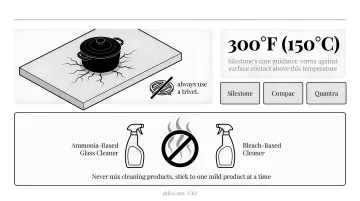
Quartz handles moderate heat fine, but direct contact with hot pots, pans, or sudden temperature swings can cause thermal shock, leading to cracking or discoloration. Silestone's care guidance specifically warns against surface contact above 300°F (150°C). Always use a trivet.
These same precautions apply across the quartz brands CKF carries, including Silestone, Compac, and Quantra — one more reason to keep cleaning simple.
Never mix cleaning products. Combining an ammonia-based glass cleaner with a bleach-based one can create harmful fumes. Stick to one mild product at a time.
Removing Stubborn Stains and Buildup
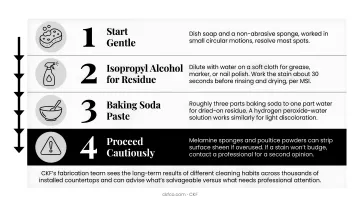
With consistent daily care, stains on quartz are rare. When they do happen, work from mild to strong, never the reverse.
- Start gentle. Use dish soap and a non-abrasive sponge, worked in small circular motions, to resolve most spots.
- Move to isopropyl alcohol for sticky residue. For grease, marker, or nail polish, dilute isopropyl alcohol with water and apply to a soft cloth. MSI recommends working the stain for about 30 seconds before rinsing and drying.
- Try a baking soda paste for dried-on residue. Mix roughly three parts baking soda to one part water for a paste. A hydrogen peroxide-water solution works similarly for light discoloration that soap alone won't budge.
- Proceed cautiously with last-resort options. Melamine sponges (the Magic Eraser type) and poultice powders can strip the surface sheen if used aggressively or too often, and some manufacturers advise against them outright.
If a stain won't budge, or you notice actual surface damage, contact a professional for a second opinion. CKF's fabrication team sees the long-term results of different cleaning habits across thousands of installed countertops. They can advise on what's salvageable with careful treatment versus what needs professional attention.
Long-Term Maintenance Tips
Quartz never needs sealing. Its non-porous engineered structure is different from granite or marble, which require periodic resealing to stay stain-resistant. Skip that step entirely.
A few habits go a long way toward preserving your countertop for decades:
- Always use cutting boards rather than cutting directly on the surface
- Use trivets under hot cookware and small appliances, including slow cookers and air fryers
- Avoid heavy impact near edges and corners, which are more vulnerable to chipping than the flat surface
- Minimize prolonged direct sunlight, since some quartz colors can fade with years of UV exposure near sunny windows
A quartz countertop fabricated correctly and cared for consistently should look great for decades. CKF's in-house fabrication team templates and installs every slab to fit precisely, which reduces the stress points that lead to early wear. Combined with these daily habits, that craftsmanship is what keeps a custom slab performing years after installation.
Frequently Asked Questions
What should you not use on quartz countertops?
Avoid bleach, ammonia-based cleaners, vinegar or other acidic products, and abrasive pads like steel wool. These can discolor, etch, or scratch the surface over time. Extreme heat exposure should also be avoided without a trivet.
Can I use vinegar to clean my quartz countertops?
Vinegar's acidity can gradually damage the resin binder with repeated use, so it's not ideal for regular cleaning. Occasional use is fine on tough hard water stains, diluted and rinsed off quickly.
Do quartz countertops need to be sealed?
No. Quartz is a non-porous engineered stone, unlike granite or marble, and manufacturers explicitly state it never requires sealing. Applying a natural stone sealer to quartz isn't recommended.
Why does my quartz countertop look hazy or dull?
Haziness usually comes from cleaning product buildup or hard water mineral deposits. Washing with mild soap, rinsing thoroughly, and buffing the surface dry typically restores the shine.
Can I use Windex or other glass cleaners on quartz?
Many glass cleaners contain ammonia, which can dull quartz with repeated use. An ammonia-free formula is safer, but plain dish soap and warm water works just as well for everyday cleaning.
How often should quartz countertops be cleaned?
Wipe down surfaces daily, clean up spills immediately, and do a deeper clean with a pH-neutral cleaner once a week. This routine keeps quartz looking new and hygienic.