This guide breaks down exactly how to strike that balance. We'll cover cabinet door styles, color palettes, hidden storage, natural materials, and how to pull it all together with the right countertop pairing.
Key Takeaways
- Choose slab-front doors and handle-free hardware as the foundation of minimalist cabinetry
- Neutral, timeless palettes like white, taupe, greige, and warm wood age gracefully
- Built-in and smart storage keep a minimalist kitchen functional, not just photogenic
- Natural materials and texture prevent flat, sterile-looking spaces
- Pairing cabinetry with the right countertop material, quartz, granite, or Dekton, ties the entire minimalist look together
Choose the Right Cabinet Door Style & Hardware
Door style makes or breaks a minimalist kitchen. It's the single biggest visual factor in whether a space reads as clean and intentional or busy and dated.
Slab-front (flat-panel) doors create smooth, uninterrupted surfaces with zero ornamentation. They're the purest expression of minimalism, and full overlay construction means doors sit nearly edge-to-edge with minimal gaps between them for an even cleaner line.
Slab-Front vs. Shaker: Which Fits Your Space?
Shaker doors, with their narrow recessed panel, can still read as minimalist when kept simple. The subtle frame adds a hint of dimension without cluttering the design. According to Houzz's 2024 Kitchen Trends Study, transitional style remains the most popular kitchen approach, with minimalist and timeless designs close behind. Shaker often bridges both worlds nicely.
Choose slab-front if: you want maximum simplicity and a contemporary edge.
Choose narrow-frame Shaker if: you want minimalist appeal with slightly more warmth and traditional resale value.
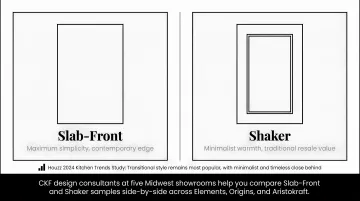
CKF's design consultants at its five Midwest showrooms can help you compare slab-front and Shaker samples side-by-side across cabinetry lines like Elements, Origins, and Aristokraft before you commit.
Handle-Free Hardware Options
Removing hardware entirely reinforces clean lines. Popular systems include:
- Integrated channel pulls milled into the door edge
- Recessed grips that disappear into the cabinet face
- Push-to-open or touch-latch systems requiring just a light press
Most homeowners still choose traditional pulls, but design professionals increasingly favor push-to-open technology for its streamlined look, the same Houzz study found.
If you do use hardware, consistency matters more than style. One matte black or brushed nickel finish throughout the kitchen keeps the eye moving smoothly instead of jumping between mismatched metals.
One practical note: handle-free cabinets depend on precise engineering. Push-to-open mechanisms and integrated pulls need professional installation to operate smoothly for years. CKF's installation teams handle this fitting as part of full cabinet installs, so mechanisms stay aligned long after the project wraps.
Build a Timeless, Neutral Color Palette
Neutral colors are the default for minimalist kitchens for a reason. White, soft gray, warm beige, and greige create visual calm and make spaces feel larger and brighter, especially in smaller kitchens with less natural light.
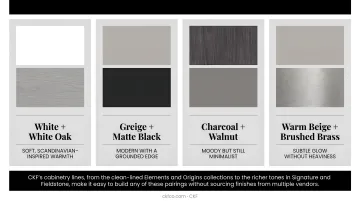
But an all-neutral kitchen can look flat without contrast. Try one of these pairings:
- White + white oak — soft, Scandinavian-inspired warmth
- Greige + matte black — modern with a grounded edge
- Charcoal + walnut — moody but still minimalist
- Warm beige + brushed brass — subtle glow without heaviness
CKF's cabinetry lines, from the clean-lined Elements and Origins collections to the richer tones in Signature and Fieldstone, make it easy to build any of these pairings without sourcing finishes from multiple vendors.
The Case for a Single Bold Accent
A growing trend involves adding one saturated, deep color (think navy, forest green, or charcoal) against an otherwise neutral kitchen. This creates a modern minimalist statement without sacrificing the calm, uncluttered base.
Why Neutral Choices Protect Your Investment
Trendy colors fade fast. Neutral, timeless palettes reduce the odds you'll want to repaint or replace cabinets in five years.
This matters more than people think. The median age of U.S. owner-occupied housing hit 40 years in 2021, and roughly 35% of homes were built before 1970, according to NAHB's housing stock analysis. That aging stock is fueling a remodeling market that topped $600 billion in 2022 expenditures.
Translation: a huge share of kitchens getting renovated right now are older homes. Choosing timeless colors protects resale value and keeps your kitchen looking current for decades, not just until the next trend cycle.
Maximize Hidden & Smart Storage
Minimalist kitchens depend on discipline. Beautiful slab-front cabinetry loses its entire effect if counters are cluttered with appliances, mail, and miscellaneous kitchen tools.
The fix is smarter storage, not more of it.
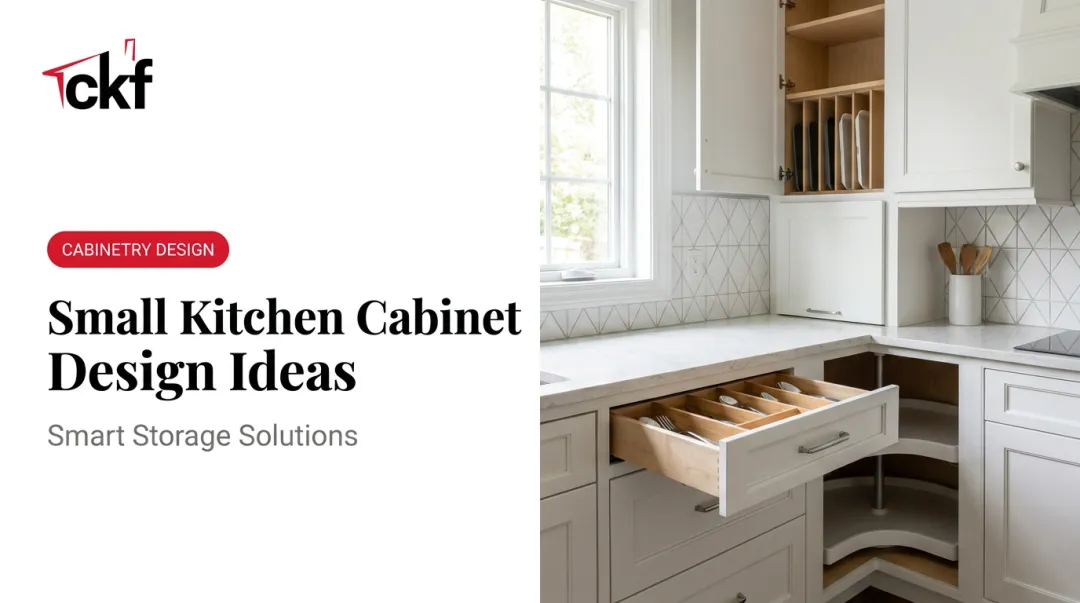
Hidden Storage Features Worth Prioritizing
- Pull-out organizers for spices, oils, and pantry staples
- Blind-corner solutions that finally make dead corner space usable
- Appliance garages that hide toasters and coffee makers behind a door
- Deep drawers instead of lower cabinets for pots and pans
- Tall pantry pull-outs that maximize narrow vertical space
- Slim upper cabinet slots for cutting boards, platters, and serving trays
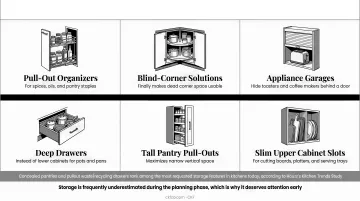
Concealed pantries and pullout waste/recycling drawers rank among the most requested storage features in kitchens today, according to Houzz's Kitchen Trends Study. Storage is frequently underestimated during the planning phase, which is why it deserves attention early.
Smart Integrated Features
Soft-close hinges, interior cabinet lighting, and toe-kick lighting all add function without breaking the clean visual lines that define minimalism.
Full-height or floor-to-ceiling custom cabinetry deserves special mention here. It maximizes storage capacity while maintaining visual continuity, since there's no awkward gap above cabinets collecting dust. This is especially valuable in smaller kitchens where every inch counts.
Hidden storage works best when it's built around your actual daily habits, not a generic layout. CKF's design consultants map out cabinet interiors, from pantry pull-outs to appliance garages, based on how you actually cook and store items. That planning is what separates a kitchen that looks good on day one from one that still works great five years later.
Add Warmth with Natural Materials & Textures
Texture, not color, is usually what keeps a minimalist kitchen from feeling cold.
A pure white kitchen with zero variation in surface or material can feel clinical, but adding texture instantly makes it feel grounded and lived-in.
Materials that add depth without visual clutter:
- Wood grain cabinet fronts, particularly white oak and walnut
- Fluted detailing on select cabinet panels or kitchen islands
- Matte finishes on both cabinets and hardware
- Natural stone with subtle movement in the veining
Wood-grain cabinetry, especially white oak, is gaining real traction right now, according to Houzz's magazine coverage of top kitchen trends. It brings warmth to an otherwise neutral palette without introducing pattern or clutter. CKF's Elements and Origins cabinetry lines offer white oak and walnut finishes built for exactly this kind of understated warmth, alongside quartzite and granite slabs with the same subtle veining.
Matte finishes deserve a specific callout too. They're increasingly popular because they:
- Reduce glare under kitchen lighting
- Hide fingerprints and smudges far better than glossy finishes
- Create a grounded, calm feeling that suits minimalist design
Pair with Countertops, Finishing Touches & Mistakes to Avoid
The countertop is often the visual anchor of a minimalist kitchen. Choose a material or pattern that competes with simple cabinetry, and the whole design feels busy. The right pairing, by contrast, makes the whole kitchen look intentional rather than assembled piece by piece.
Quartz, marble, and natural stone with subtle veining pair especially well with slab-front cabinetry. The clean cabinet lines let the stone's natural movement become the kitchen's quiet focal point.
Why One-Stop Sourcing Matters
Coordinating cabinets and countertops from separate vendors often means multiple appointments, color mismatches, and timeline headaches. CKF's showrooms take a different approach, offering custom in-house fabricated countertops alongside a wide range of cabinetry lines, all under one roof.
That matters for minimalist kitchens specifically, where even slight tone mismatches between cabinet finish and countertop stand out. Seeing both materials together, in person, before committing helps avoid costly surprises later — the same kind of surprises that show up in the most common minimalist design mistakes below.
Common Minimalist Mistakes to Avoid
- Too much white without texture — creates a flat, sterile look rather than a calm one
- Insufficient layered lighting — a single overhead fixture leaves minimalist kitchens feeling harsh or dim
- Prioritizing looks over daily function — a beautiful kitchen that doesn't fit how you actually cook and store food fails long-term
Designers consistently flag inadequate lighting layers and poor storage planning as top regrets in kitchen renovations, according to Housebeautiful's designer survey.
Working with an experienced, cost-conscious design team helps you avoid these pitfalls before they're built into the walls. A good designer balances minimalist aesthetics with a realistic budget and how you'll actually live in the space.
Frequently Asked Questions
What are the colors for minimalist kitchen cabinets?
Neutral tones like white, taupe, greige, and warm wood form the foundation. Subtle contrast, such as white with oak or charcoal with walnut, keeps the palette from feeling flat.
What kitchen cabinets will never go out of style?
Slab-front and Shaker-style cabinets in neutral, timeless colors have the longest lasting appeal. They adapt well as decor trends shift around them.
Are handleless cabinets practical for everyday use?
Yes. Push-to-open and integrated pull systems are durable and function reliably for years, provided they're installed correctly by an experienced professional.
How do I make a minimalist kitchen feel cozy instead of cold?
Lean on natural materials like wood grain and stone, layer your lighting across task, ambient, and accent sources, and add warm wood accents. Texture does more work than color here.
Can I have a minimalist kitchen in a small space?
Absolutely. Floor-to-ceiling cabinetry, hidden storage, and pale tones help small kitchens feel open rather than cramped. Vertical space is your biggest ally.
Do I need custom cabinets to achieve a minimalist look?
Custom cabinetry offers the most flexibility for handle-free designs and floor-to-ceiling storage. That said, semi-custom lines like those CKF carries can achieve a similar look with the right door style and finish.