This is one of the most common headaches in kitchen renovation. Granite is a natural stone, pulled from the earth in massive blocks, so no two pieces are ever truly identical, even when they share the same name on a sample chip. The good news: a close, cohesive match is almost always achievable if you know what to ask for and where to look.
This guide walks through why matching granite is trickier than most homeowners expect, practical steps for finding a near-match, which colors are easiest to source years later, and how to coordinate granite with cabinets and flooring for a pulled-together look.
Key Takeaways
- Color and veining vary naturally, even within the same named granite line
- Requesting the quarry block or bundle number boosts your match odds
- Neutral, high-demand colors stay easier to re-source than rare or exotic slabs
- A fabricator with strong quarry relationships makes matching projects far less stressful
Why Matching Granite Countertops Is Uniquely Challenging
Granite forms deep underground and gets quarried in enormous blocks, sometimes weighing 20 tons or more. Each block gets sliced into slabs, which are typically bundled and numbered together.
Here's the catch: slabs cut from the same block look nearly identical, but slabs sold under the same color name from a different block, or from a different quarry run entirely, can look noticeably different.
Think of it like wine vintages. "Cabernet Sauvignon" tells you the grape, not the harvest year, the soil, or the weather that season. "Ubatuba granite" tells you the general look, not the exact mineral distribution in the block your countertop came from.
Availability Shifts Over Time
Quarries don't produce forever. Popular colors from the early 2000s, like Venetian Gold or Santa Cecilia, have become harder to find in their original patterning. Quarries deplete certain veins and shift output toward the whites and cooler grays currently trending. If your countertop is 8-10 years old, the exact bundle may simply no longer exist.
Common Scenarios That Require Matching
- Kitchen island additions built after the original countertop installation
- Chip or crack repairs where a full panel replacement is needed
- Multi-room projects, like extending a kitchen granite into a nearby bathroom
- Phased renovations where budget dictates finishing one area now and another later
Photos, catalog images, and online swatches are also unreliable for matching color. Screen calibration and lighting distort color constantly. In-person slab viewing under natural daylight is the only way to judge a true match.
Is It Possible to Match Granite Countertops? Practical Tips for a Close Match
Yes, in most cases. Granite can often be closely matched, but homeowners should go in with realistic expectations. An exact, seamless match isn't guaranteed with natural stone. What is achievable is a match close enough that the transition looks intentional rather than accidental.
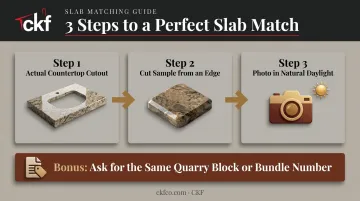
Start by bringing something tangible to your fabricator or slab yard:
- The actual countertop piece, if you have a cutout from a sink or cooktop installation
- A cut sample, even a small one from an inconspicuous edge
- A photo taken in natural daylight, avoiding overhead kitchen lighting or flash
Ask for the Same Quarry Block or Bundle Number
This is the single best move you can make. Requesting slabs from the same block or bundle as your original installation dramatically increases your odds of a true match. Experienced fabricators can often trace this information through supplier invoices and purchase records, especially if your original installer used the same fabrication shop.
Consider Full Slab Replacement Over Partial Matching
When an exact match isn't possible, replacing the entire countertop surface, rather than trying to blend a new slab next to an old one, usually produces a more cohesive, higher-end result.
Fabricators with long-standing quarry and supplier relationships often carry older inventory, remnants, or special-order slabs that individual buyers can't access on their own. CKF's in-house fabrication team draws on established supplier and quarry relationships to source this kind of inventory, including remnant slabs available through our outlet section.
If a perfect match still isn't in the cards, lean into the difference instead of hiding it:
- A waterfall edge that visually separates old and new surfaces
- Strategic seam placement in low-visibility spots, like behind a stove or under an overhang
- A contrasting accent strip that frames the transition as a design choice, not a compromise
What Is the Most Popular Granite Countertop Color?
Trends shift, but a few names keep showing up year after year. According to MSI's 2025 granite color trends report, colors like Alpine Valley, Azul Celeste, and Titanium are among the most requested patterns this year, alongside long-running favorites in the white and black families.
Widely quarried, neutral colors tend to stay easier to match and re-source years down the road compared to rare or exotic varieties. Consistent demand keeps supply chains active, which means:
- More slabs cut and bundled regularly
- Better odds a fabricator can trace or reorder a similar bundle
- Lower price volatility since supply keeps pace with demand
At CKF's Midwest showrooms, colors like Black Pearl and Blanco Gabriele from the Sensa Granite Collection fall into this reliable category, offering the kind of steady availability homeowners want when planning future additions.
If you're planning a phased renovation or thinking about resale value, ask your fabricator which colors have a long track record of staying in stock. Evergreen colors make it easier to match a similar slab if you expand or replace a section years down the line.
Design Tips: Matching Granite with Cabinets and Flooring
Matching your granite to the rest of the room matters just as much as matching a new slab to an old one. A few grounded design principles keep the whole space looking intentional.
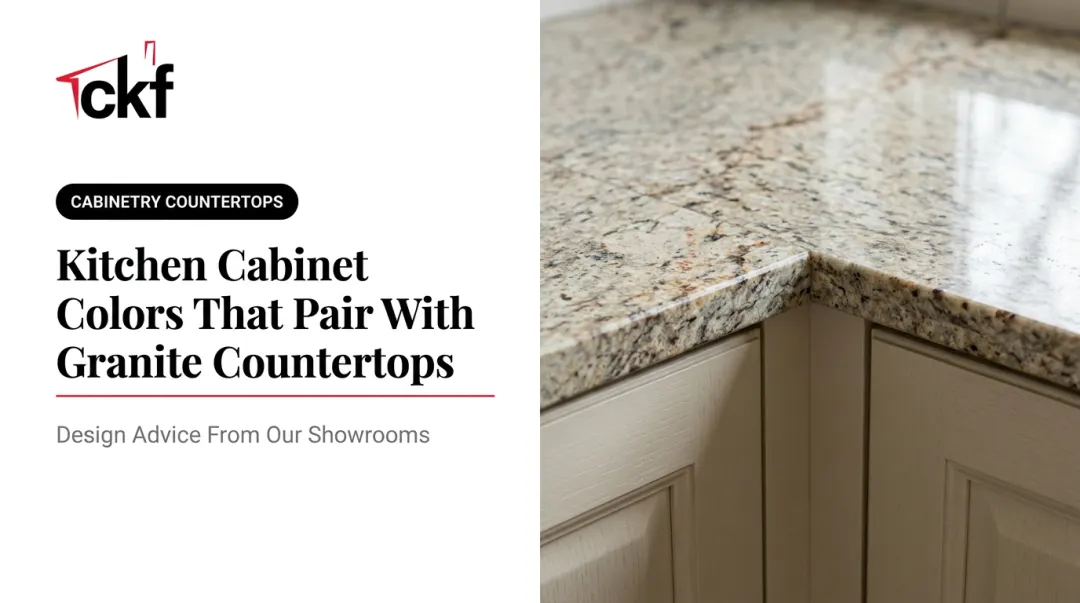
Cabinet colors: The classic rule is contrast. Light granite pairs well with darker cabinets, like espresso or walnut, while darker, boldly patterned granite balances nicely against lighter cabinets like white shaker.
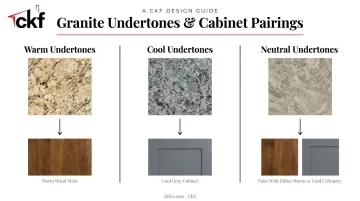
Beyond light and dark, undertone matters:
- Warm undertones (beige, gold, brown flecks) pair naturally with warm wood stains or cream cabinets
- Cool undertones (gray, blue, black flecks) pair better with cooler cabinet paints or gray-toned stains
- Neutral undertones (soft greige, taupe) offer the most flexibility, working with both warm and cool cabinet tones
Flooring: Beyond cabinets, vary the value and contrast between your countertop, cabinets, and flooring so no two adjacent surfaces blend into a flat, monotone look. If your cabinets and floor are already similar tones, let the granite provide the contrast that keeps the kitchen visually interesting rather than flat.
Backsplash: Beyond flooring, pull one secondary fleck or vein color from the granite into your backsplash tile. This small detail ties the whole wall design back to the countertop instead of leaving it feeling disconnected.
Test under real light: Before finalizing anything, bring physical cabinet door samples and flooring swatches to your slab selection appointment at a CKF showroom. View them together under both natural daylight and your kitchen's actual lighting, since granite can shift in appearance depending on the light source.
Work with an Expert Fabricator for a Seamless Match
Coordinating granite, cabinets, and flooring across separate vendors means multiple appointments, multiple samples, and a lot of guesswork trying to remember exactly how one material looked next to another.
CKF has offered cabinets and countertops under one roof since expanding into stone fabrication in 2003, which cuts out that back-and-forth entirely. Homeowners can compare granite slabs, cabinet finishes, and flooring samples side by side in a single visit at any of CKF's five Midwest showrooms.
A few things that make a real difference in matching outcomes:
- In-house fabrication, so the same team handling your slab selection also handles the cutting and installation
- Two decades of stone and solid surface expertise, developed since CKF added fabrication services in 2000
- Long-standing local supplier relationships, which help when tracing an older bundle or sourcing remnant inventory for smaller projects like islands or repairs
If you're staring down a granite-matching project, schedule an in-person design consultation before buying anything. Seeing slabs, cabinet doors, and flooring together under real lighting beats guessing from a sample chip every time.
Frequently Asked Questions
Is it possible to match granite countertops?
Yes, close matches are achievable most of the time, especially when you can source the same quarry block or bundle. An exact, pixel-perfect match isn't guaranteed with a natural material, but a cohesive result is realistic.
What is the most popular granite countertop color?
Neutral colors in the white, black, and warm-brown families remain the most requested, with 2025 trends favoring patterns like Alpine Valley and Azul Celeste. Neutral tones also tend to be easier to re-source years later.
Can I match a new granite countertop to an older existing one?
It's easier with a physical sample or cutout in hand, along with a fabricator who can trace the original bundle number. Without a sample, matching relies more heavily on the fabricator's experience and inventory access.
Why do granite slabs look different even when labeled the same color?
Granite is quarried in blocks, and slabs from different blocks, even under the same color name, can vary in veining, mineral flecks, and background tone. It's a natural material, not a manufactured, repeatable pattern.
How much does it cost to replace granite countertops for a better match?
Costs vary widely based on slab rarity, square footage, and edge profile, ranging from $40 to $100+ per square foot installed, according to Angi's granite countertop cost guide. A local fabricator can give you an exact quote based on your specific slab choice.
Does granite countertop color change or fade over time?
Granite itself is highly stable and resists fading from sunlight or age. Color shifts usually stem from sealant wear, not the stone itself. The Natural Stone Institute notes that periodic resealing helps maintain the original appearance.