Still, plenty of buyers hesitate. Is wood too fragile for a busy kitchen? Will it warp the first time someone leaves a wet dish towel on it overnight? Fair questions, and the answers aren't as simple as "yes" or "no."
This guide breaks down the real pros and cons of wood countertops, compares them honestly against granite and quartz, and covers what maintenance actually looks like week to week. By the end, you'll know whether wood fits your kitchen, and your lifestyle.
Key Takeaways
- Wood delivers warmth stone can't match, but it demands more hands-on care.
- Sealed wood can rival granite for hygiene, thanks to natural antibacterial properties in some species.
- Per square foot, wood usually costs less than granite, quartz, or marble installed.
- With regular oiling and refinishing, wood countertops can last 20+ years.
Pros of Wood Countertops
Wood's renewed popularity reflects real performance advantages, not just design trends. Here's where it outperforms stone.
- Natural warmth and character: Wood feels warm underfoot and to the touch, unlike cold stone. Species like walnut, maple, and oak suit styles from rustic farmhouse to sleek modern.
- Renewable, sometimes reclaimed: Wood is renewable, and reclaimed lumber like chestnut or heart pine adds history stone can't match. FSC certification types vary, so verify which one applies.
- Repairable, not replaceable: Stone chips and cracks are often permanent or need specialist repair. Wood scratches and dents can be sanded and refinished, extending its usable life.
Cost Comparison: Wood vs. Stone
| Material | Installed Cost (per sq. ft.) |
|---|---|
| Wood/butcher block | $50–$150 |
| Granite | $40–$200 |
| Quartz | $50–$200 |
| Marble | $50–$200 |
HomeAdvisor's 2025 cost data puts wood countertops at $50 to $150 per square foot installed, with a typical project running $1,200 to $5,000 total. Granite, quartz, and marble overlap that range on the low end, but climb well past it at premium tiers. Mid-grade wood often lands below premium stone, even if high-end species close the gap.
The Antibacterial Myth, Debunked
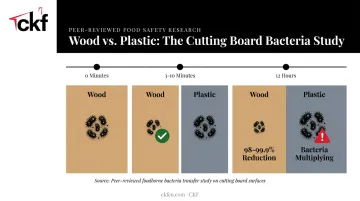
Many assume wood harbors more bacteria than plastic. A peer-reviewed study published on PubMed tested nine hardwoods and four plastic polymers inoculated with foodborne bacteria, including Salmonella and E. coli.
At low bacterial loads, wood became essentially bacteria-free within 3 to 10 minutes. Even at high loads, populations dropped by at least 98%, often more than 99.9%, within 12 hours, while plastic let bacteria linger and multiply overnight. That research focused on cutting boards, not installed counters, but it dismantles the "wood is unsanitary" assumption.
Wood Grain Patterns & Popular Species
Not every wood countertop is built the same way. Construction method affects stability, price, and how the surface handles daily wear.
| Grain Type | Construction | Best For |
|---|---|---|
| Edge grain | Long strips glued lengthwise | Everyday counters; stable and easy to sand |
| End grain | Small blocks stand on end | Direct chopping surfaces; premium pricing |
| Face/flat grain | Wide boards laid flat | Furniture-style islands and bar tops |
Species matter just as much. Hardness, measured on the Janka scale, determines how well a countertop resists dents:
- Hard maple (1,450 lbf): the most dent-resistant common choice
- White oak (1,350 lbf): durable with a classic grain pattern
- Teak (1,070 lbf): natural oils help it shed moisture
- Black walnut (1,010 lbf): deep brown tones, moderate hardness
- Black cherry (950 lbf): beautiful color, softer surface
Choose based on how your kitchen actually gets used, not just the color you're drawn to in a showroom photo.
Cons of Wood Countertops
Wood isn't maintenance-free, and pretending otherwise sets homeowners up for disappointment.
- Water damage risk: Unsealed or poorly maintained wood can warp, stain, or ring near sinks, even with proper sealing.
- Ongoing upkeep: Expect oiling every few months to twice a year, depending on the finish and manufacturer instructions.
- Scratches, dents, and heat marks: Softer species like cherry dent more easily than hard maple, making trivets and cutting boards essential.
- Not built for constant moisture: Avoid installing under sinks or anywhere water sits continuously; stone and quartz handle wet zones better.
- Chemical sensitivity: Bleach, ammonia, and undiluted vinegar can break down sealants and dull the finish over time.
- More complex installation: Precise leveling, on-site sealing, and custom sink cutouts add labor time compared to prefabricated stone or quartz slabs.
Chemical tolerance varies by finish. Always check your manufacturer's specific guidelines before reaching for bleach or diluted cleaners.
Wood Countertops vs. Granite and Quartz
Most buyers ultimately compare wood against one of two rivals. Here's how each actually stacks up.
Wood vs. Granite
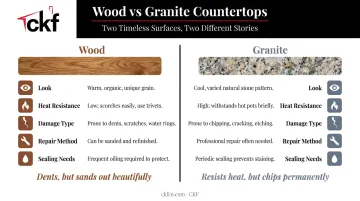
Granite feels formal: polished, cool, and permanent, while wood feels lived-in and warm. That's a style choice, but durability differs too.
| Factor | Wood | Granite |
|---|---|---|
| Look | Warm, casual-to-modern | Formal, polished |
| Heat resistance | Scorches; needs trivets | Excellent |
| Damage type | Dents, scratches | Chips, cracks |
| Repair | Sand and refinish at home | Specialist repair, often visible |
| Sealing | Oil or wax, ongoing | Periodic sealing |
Granite resists heat and scratches better, but chips and cracks under sharp impact, and repairs are rarely invisible. Wood dents more easily, but sanding erases most damage completely. Busy families who want a forgiving surface often lean wood; those wanting a low-touch, formal look tend to pick granite despite the chip risk.
Wood vs. Quartz
Quartz is engineered, non-porous, and close to maintenance-free, with no sealing, minimal staining risk, and consistent color slab to slab. Wood can't match that convenience.
What wood offers instead: genuine material authenticity, unique grain in every board, and no fixed thickness restrictions the way engineered slabs have. Granite and quartz perform similarly across most durability tests, though granite handles heat slightly better. Neither material replaces wood's warmth or repairability.
Shoppers weighing these trade-offs can view granite and quartz slabs firsthand at any CKF Midwest showroom before deciding.
Maintenance, Lifespan & Cost Expectations
Caring for wood countertops isn't complicated, just different from wiping down quartz, since wood surfaces need periodic oiling and moisture control that engineered stone doesn't.
Daily and weekly care:
- Wipe spills immediately with a damp cloth and mild soap
- Dry the surface fully; never let water sit
- Sanitize occasionally with a light vinegar-water solution, if your finish allows it
- Avoid bleach and ammonia-based cleaners, which break down sealants over time
Finish Type Determines Your Schedule
| Finish | Typical Re-oiling | Best For |
|---|---|---|
| Mineral oil | Monthly | Everyday cooking surfaces |
| Tung oil/urethane | A few times yearly | Moderate wet exposure |
| Hardwax oil | 1–2 times yearly | Balanced maintenance |
| Conversion varnish | Full refinish when worn | Owners who prefer minimal upkeep |
Some manufacturers now offer factory-cured, waterproof coatings that need almost no routine recoating, trading a bit of that raw-wood feel for near-zero maintenance.
How long do wood countertops actually last? With consistent care, wood countertops typically last around 20 years, sometimes longer. That's shorter than granite's 100-plus-year ceiling, but most kitchens get remodeled before either surface hits its true limit. Periodic refinishing, not replacement, is usually what keeps wood looking new.
As for cost: expect $50 to $150 per square foot installed, with total projects commonly falling between $1,200 and $5,000. Species, grain construction (end grain costs more than edge grain), and finish type all move that number.
Is Wood the Right Choice for Your Kitchen?
Wood rarely makes sense as the only surface in a kitchen. It shines in specific roles:
- Kitchen islands, where food prep and gathering happen away from the sink
- Breakfast bars and eating counters with less water exposure
- Accent sections paired with stone or quartz around sinks and cooktops
Not sure which role fits your kitchen? Run through this quick self-assessment:
- Lifestyle: Young kids or pets in the house? Wood forgives dents better than it forgives standing water.
- Budget: Comfortable investing time, not just money, into upkeep?
- Commitment: Willing to oil the surface on a schedule, even during busy months?
- Zones: Will this counter sit near a sink or cooktop, or somewhere drier?
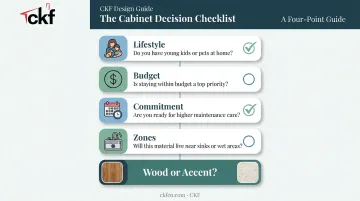
If you answered "not really" to more than one, wood might work better as an accent than a full countertop.
This is exactly the kind of decision CKF's in-house design team helps homeowners sort through.
With showrooms across the Midwest, including Omaha and Kansas City, CKF's designers and craftsmen can walk you through wood alongside granite, quartz, and other surfaces in a single visit. You'll land on a material built for your kitchen's real-life demands, not just its Pinterest board.
Frequently Asked Questions
How long do wooden countertops last?
With proper sealing, cleaning, and periodic refinishing, wood countertops typically last 20 years or more, similar to many well-maintained stone surfaces over that same window.
Are wood countertops better than granite?
It depends on priorities. Granite offers superior heat and scratch resistance, while wood offers warmth, a lower price point, and far easier repairability at home.
What's the healthiest countertop?
Properly sealed wood can be as hygienic as stone, thanks to natural antibacterial properties in some species. Non-porous quartz is also a strong low-bacteria option.
How much do wood countertops cost?
Expect roughly $50 to $150 per square foot installed. Species, grain type (edge, end, or face), and finish all affect where you land in that range.
Can you put a hot pot directly on a wood countertop?
No. Wood can scorch or discolor under high heat, so trivets or hot pads are always recommended, regardless of species or finish.
Should you DIY install wood countertops or hire a professional?
Simple, straightforward installs can be DIY-friendly. But sink cutouts and proper sealing are easy to get wrong, so professional installation is the safer bet for most kitchens.